

The rapid advancement of autonomous robots has revolutionized industries ranging from manufacturing to logistics, healthcare to agriculture. These sophisticated machines demonstrate remarkable capabilities in navigating through intricate environments that would challenge even skilled human operators. Understanding how autonomous robots perceive, process, and respond to their surroundings reveals the complex interplay of sensors, algorithms, and artificial intelligence that makes modern robotics possible. The technology behind robot navigation continues to evolve, incorporating cutting-edge developments in machine learning, computer vision, and spatial mapping to create systems that can adapt to dynamic and unpredictable conditions.
Light Detection and Ranging technology serves as a cornerstone for autonomous robot navigation, providing precise three-dimensional mapping of surrounding environments. LiDAR systems emit laser pulses and measure the time required for light to return after hitting objects, creating detailed point clouds that represent spatial relationships. Modern autonomous robots utilize multiple LiDAR units positioned strategically around their chassis to achieve 360-degree environmental awareness. The technology excels in detecting obstacles, measuring distances, and identifying surface textures with millimeter-level accuracy, making it invaluable for navigation in both structured and unstructured environments.
Advanced LiDAR implementations incorporate solid-state designs that eliminate moving parts, increasing reliability while reducing maintenance requirements. These systems can operate effectively in various lighting conditions, from bright sunlight to complete darkness, providing consistent performance across different operational scenarios. The data processing capabilities of modern LiDAR units enable real-time obstacle detection and path planning, allowing robots to make split-second navigation decisions. Integration with other sensor modalities creates redundant safety systems that ensure reliable operation even when individual components experience temporary failures or degraded performance.
Computer vision technology empowers autonomous robots with sophisticated visual perception capabilities that complement and enhance other sensing modalities. High-resolution cameras capture detailed imagery that advanced algorithms process to identify objects, recognize patterns, and interpret visual cues within the environment. Stereo camera configurations provide depth perception, enabling robots to gauge distances and understand three-dimensional relationships between objects. Machine learning models trained on extensive datasets allow these systems to differentiate between various object types, from static obstacles to moving personnel, ensuring appropriate navigation responses.
Modern vision systems incorporate specialized cameras designed for specific environmental conditions, including infrared sensors for low-light operations and thermal imaging for temperature-sensitive applications. The integration of artificial intelligence enables continuous learning and adaptation, allowing robots to improve their visual recognition capabilities over time. Real-time image processing algorithms analyze visual data streams to extract relevant navigation information while filtering out irrelevant details that might otherwise cause confusion or computational delays. These sophisticated vision systems work in conjunction with other sensors to create comprehensive environmental understanding.
Simultaneous Localization and Mapping represents one of the most critical technologies enabling autonomous robot navigation in unknown or changing environments. SLAM algorithms allow robots to build detailed maps of their surroundings while simultaneously tracking their precise position within those maps. This dual capability eliminates the need for pre-existing environmental maps, enabling autonomous robots to operate effectively in previously unexplored territories. The mathematical complexity of SLAM involves probabilistic estimation techniques that account for sensor noise, measurement uncertainties, and computational constraints while maintaining real-time performance requirements.
Contemporary SLAM implementations leverage advanced particle filtering, extended Kalman filtering, and graph-based optimization techniques to achieve superior mapping accuracy and localization precision. These algorithms continuously refine environmental maps as robots gather additional sensor data, correcting previous estimates and improving overall navigation performance. Loop closure detection capabilities enable robots to recognize previously visited locations, allowing for map correction and drift elimination. The robustness of modern SLAM systems ensures reliable operation even in environments with repetitive features, dynamic objects, or challenging lighting conditions that might confuse traditional navigation approaches.
The process of environmental modeling extends beyond simple obstacle detection to create rich, multi-layered representations of operational spaces. Advanced mapping systems generate occupancy grids, point clouds, and semantic maps that capture different aspects of environmental structure and content. These comprehensive models include information about surface materials, traversability characteristics, and dynamic object behaviors that influence navigation decisions. Machine learning algorithms analyze historical data to predict environmental changes and adapt mapping strategies accordingly, ensuring continued accuracy as conditions evolve.
Multi-resolution mapping techniques allow robots to maintain detailed local maps for immediate navigation while preserving broader regional context for long-term planning. Hierarchical map structures enable efficient storage and retrieval of environmental data, supporting rapid pathfinding calculations across large operational areas. The integration of temporal information creates four-dimensional maps that account for time-dependent environmental changes, such as regular foot traffic patterns or scheduled equipment movements. These sophisticated mapping capabilities enable autonomous robots to develop increasingly nuanced understanding of their operational environments over extended periods.
Global path planning algorithms enable autonomous robots to calculate optimal routes from current positions to designated destinations while considering environmental constraints and operational objectives. These systems utilize graph-based search algorithms, including A-star, Dijkstra, and rapidly-exploring random trees, to identify feasible paths through complex environments. Advanced implementations incorporate multiple optimization criteria, balancing factors such as travel time, energy consumption, safety margins, and operational efficiency. The computational efficiency of modern path planning enables real-time route calculation even in large, complex environments with numerous obstacles and constraints.
Probabilistic roadmap methods and potential field approaches provide alternative strategies for environments where traditional grid-based planning proves insufficient. These techniques excel in high-dimensional configuration spaces where robots must consider multiple degrees of freedom simultaneously. Dynamic replanning capabilities allow systems to adapt routes in response to unexpected obstacles, changing environmental conditions, or updated mission requirements. The integration of predictive modeling enables proactive path adjustment based on anticipated environmental changes, reducing the likelihood of navigation conflicts or delays.
Local navigation systems manage immediate obstacle avoidance and trajectory refinement while maintaining progress toward global path objectives. Dynamic window approaches evaluate potential velocity commands based on robot kinematics, obstacle locations, and goal proximity to select optimal local movements. These algorithms operate at high frequencies to ensure rapid response to emerging obstacles or changing conditions. The balance between global path adherence and local obstacle avoidance requires sophisticated control strategies that prevent robots from becoming trapped in local minima or oscillatory behaviors.
Velocity obstacle methods and reciprocal collision avoidance enable safe navigation in environments with moving obstacles, including other robots or human personnel. These techniques predict future collision scenarios and adjust robot trajectories to maintain safe separation distances while minimizing disruption to planned routes. Advanced local navigation incorporates social awareness algorithms that enable appropriate interaction with human operators and other autonomous systems sharing operational spaces. The integration of safety protocols ensures that obstacle avoidance behaviors maintain conservative margins while preserving operational efficiency and mission completion capabilities.
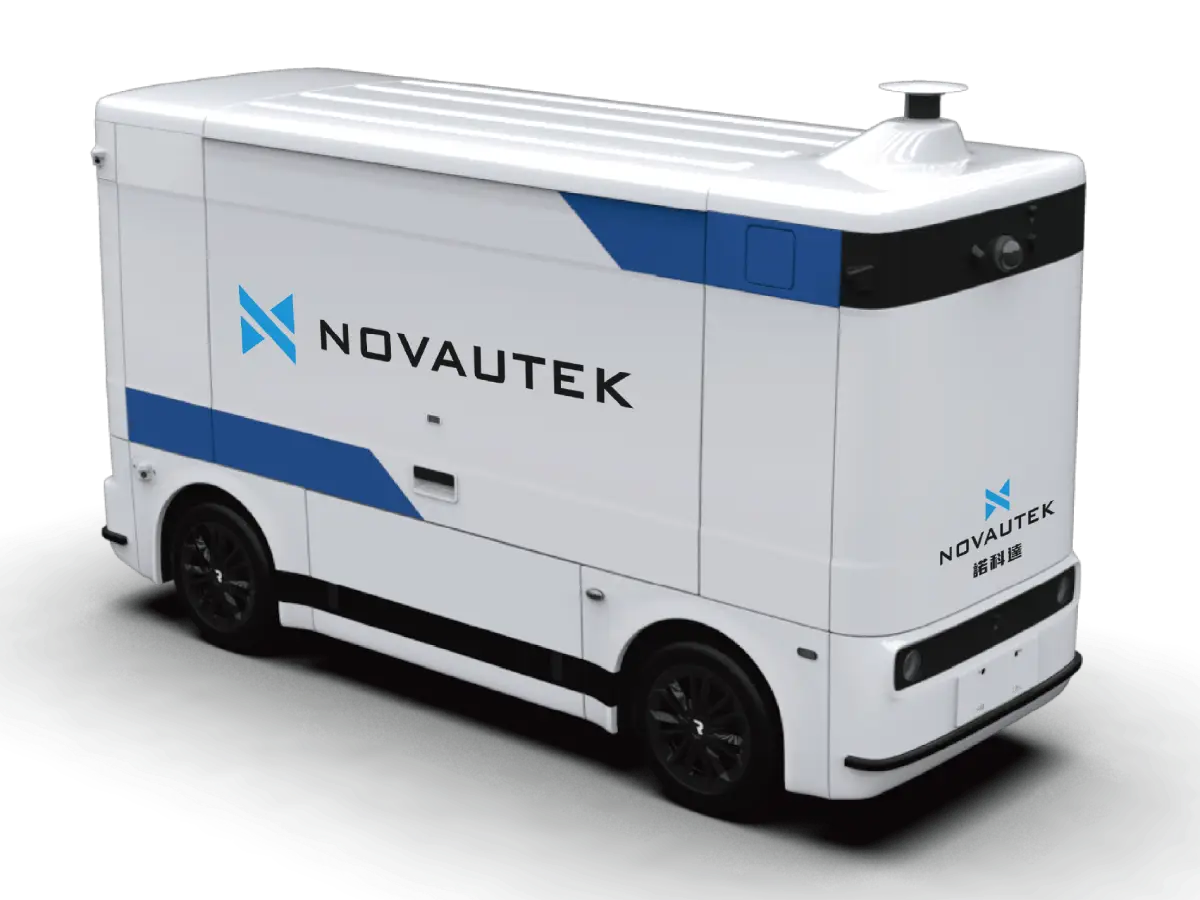
Deep learning technologies have revolutionized how autonomous robots interpret and respond to complex environmental conditions. Convolutional neural networks process visual sensor data to identify objects, classify surfaces, and predict environmental behaviors with unprecedented accuracy. These systems learn from extensive training datasets that include diverse operational scenarios, enabling robust performance across varied conditions and environments. The ability to generalize from training data allows robots to handle novel situations that may not have been explicitly programmed into traditional rule-based systems.
Recurrent neural networks and transformer architectures enable temporal reasoning capabilities that help robots understand dynamic environmental patterns and predict future conditions. These advanced models can process sequential sensor data to identify trends, recognize recurring patterns, and anticipate environmental changes that might affect navigation decisions. Transfer learning techniques allow robots to adapt knowledge gained in one environment to new operational contexts, reducing the training time and data requirements for deployment in novel settings. The continuous learning capabilities of modern AI systems enable autonomous robots to improve their environmental understanding and navigation performance throughout their operational lifecycles.
Reinforcement learning algorithms enable autonomous robots to develop and refine navigation strategies through interaction with their operational environments. These systems learn optimal behaviors by receiving feedback on navigation performance, gradually improving their decision-making capabilities through experience. The trial-and-error nature of reinforcement learning allows robots to discover effective navigation strategies that might not be obvious through traditional programming approaches. Advanced implementations incorporate safety constraints and performance bounds to ensure that learning processes do not compromise operational safety or efficiency.
Meta-learning techniques enable robots to quickly adapt to new environments by leveraging knowledge gained from previous operational experiences. These systems can rapidly adjust navigation parameters, sensor configurations, and planning strategies based on environmental characteristics and operational requirements. The incorporation of uncertainty quantification helps robots assess the confidence levels of their navigation decisions, enabling appropriate risk management and contingency planning. Federated learning approaches allow multiple robots to share navigation experiences and collectively improve their operational capabilities while maintaining data privacy and security requirements.
The integration of multiple sensor modalities creates robust perception systems that exceed the capabilities of individual sensing technologies. Sensor fusion algorithms combine data from LiDAR, cameras, IMU units, GPS receivers, and other sensors to create comprehensive environmental understanding. Kalman filtering and particle filtering techniques manage sensor uncertainties and provide optimal state estimates based on available information. The redundancy provided by multi-modal sensing ensures continued operation even when individual sensors experience failures or degraded performance due to environmental conditions.
Advanced fusion algorithms account for varying sensor characteristics, including different update rates, accuracy levels, and failure modes. Temporal alignment systems ensure that data from different sensors represents consistent environmental states despite varying processing delays and sampling frequencies. The weighting of sensor contributions adapts dynamically based on environmental conditions and sensor performance, optimizing the reliability and accuracy of fused perception data. Machine learning approaches enable continuous improvement of fusion algorithms based on operational experience and performance feedback.
Real-time processing requirements demand sophisticated computational architectures that can handle large volumes of sensor data while maintaining deterministic response times. Edge computing implementations bring processing capabilities closer to sensors, reducing latency and bandwidth requirements while enabling rapid local decision-making. Parallel processing architectures and GPU acceleration enable simultaneous handling of multiple data streams and complex algorithmic operations. The optimization of computational resources ensures that navigation systems can operate effectively within the power and processing constraints of mobile robotic platforms.
Prioritization algorithms manage computational resources by focusing processing power on the most critical navigation tasks and sensor data streams. Hierarchical processing structures enable efficient handling of different temporal and spatial scales, from immediate obstacle avoidance to long-term mission planning. The implementation of graceful degradation strategies ensures that systems can maintain basic navigation capabilities even under high computational loads or hardware limitations. Real-time monitoring and performance optimization enable continuous system tuning to maintain optimal navigation performance across varying operational conditions.
Advanced coordination systems enable multiple autonomous robots to operate simultaneously within shared environments while avoiding conflicts and optimizing collective performance. Distributed consensus algorithms ensure that robots can agree on navigation priorities, resource allocation, and operational boundaries without requiring centralized coordination. Communication protocols enable real-time information sharing about environmental conditions, obstacle locations, and planned trajectories. The scalability of coordination systems allows for the management of large robot fleets while maintaining operational efficiency and safety standards.
Auction-based task allocation methods enable dynamic assignment of navigation objectives and operational responsibilities based on robot capabilities and current positions. Game-theoretic approaches model robot interactions to identify optimal coordination strategies that maximize overall system performance while accounting for individual robot constraints. The integration of formation control enables coordinated movement patterns for applications requiring precise spatial relationships between multiple robots. Fault tolerance mechanisms ensure that coordination systems can adapt to robot failures or communication disruptions without compromising overall operational capabilities.
Safety protocols govern how autonomous robots interact with human personnel and other non-robotic entities within operational environments. Predictive modeling systems analyze human movement patterns to anticipate potential conflicts and adjust robot trajectories accordingly. Social navigation algorithms incorporate cultural and contextual factors that influence appropriate robot behavior in different settings. The implementation of fail-safe mechanisms ensures that robots can safely halt operations or transition to manual control when encountering unexpected situations or system failures.
Communication interfaces enable human operators to monitor robot status, modify navigation parameters, and intervene in autonomous operations when necessary. Intuitive visualization systems present complex navigation data and system status information in formats that facilitate rapid human understanding and decision-making. The integration of voice and gesture recognition enables natural interaction modalities that reduce the learning curve for human operators. Emergency response protocols ensure rapid system shutdown and safe robot positioning in response to safety threats or operational emergencies.
Indoor environments typically present challenges related to GPS signal availability, requiring robots to rely heavily on internal sensors and SLAM technologies for localization. Narrow corridors, doorways, and stairs create geometric constraints that demand precise maneuvering capabilities. Outdoor environments introduce variable weather conditions, uneven terrain, and GPS signal variations that require robust sensor fusion and adaptive algorithms. Dynamic lighting conditions affect camera-based systems differently in each environment, necessitating appropriate sensor selection and calibration strategies for optimal performance across diverse operational contexts.
Modern autonomous robots employ multi-layered obstacle detection systems that combine real-time sensor data with predictive algorithms to identify and respond to unexpected environmental changes. Emergency stopping systems can halt robot movement within milliseconds when critical obstacles are detected. Dynamic replanning algorithms calculate alternative routes when original paths become blocked or unsafe. Machine learning systems enable robots to classify new obstacle types and develop appropriate avoidance strategies based on previous experiences and training data, ensuring adaptive responses to novel environmental challenges.
Artificial intelligence enables continuous learning and performance optimization through analysis of navigation experiences and outcomes. Machine learning algorithms identify patterns in environmental data and operational scenarios to improve future navigation decisions. Predictive modeling systems anticipate environmental changes and potential navigation challenges based on historical data and current conditions. Neural network architectures process complex sensor data to extract relevant navigation information and identify optimal path planning strategies that traditional algorithms might miss, resulting in increasingly sophisticated and efficient navigation capabilities.
Multi-robot coordination systems utilize distributed communication protocols to share navigation intentions, current positions, and environmental observations among fleet members. Conflict resolution algorithms identify potential collisions or resource conflicts and negotiate solutions that optimize overall system performance. Priority-based systems establish navigation hierarchies that determine right-of-way in congested areas or critical operational zones. Distributed task allocation enables dynamic assignment of navigation objectives based on robot capabilities, current positions, and operational requirements while maintaining safety margins and operational efficiency across the entire fleet.
Copyright © 2024-2026 Novautek Autonomous Driving Limited, All rights reserved. Privacy policy
 EN
EN
 Hot News